VCP3 2025 Vestergaard Candidate - Jackline Martine
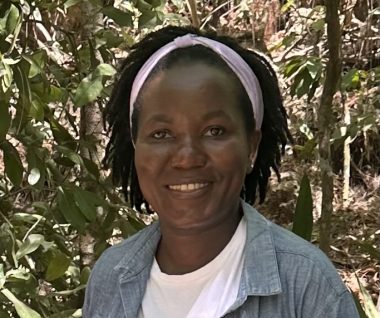
Jackline Martin was the 2025 Vector Control Professional Placement Candidate at Vestergaard. She is a public health researcher with more than twelve years of experience in vector control with a focus on malaria vector control using core interventions. She has been involved in community-based studies assessing the durability and efficacy of new-generation ITNs in Tanzania. Her background combines experience in entomological surveillance, data management, and research coordination, with a strong commitment to advancing evidence-based malaria control strategies.
The below interview was conducted with her during her time as a VCP3 candidate.
What is your favourite part of working in your field?
What I value most about working in malaria research is the direct and meaningful impact it has on public health and lives saved. Each study, whether conducted in the laboratory or the field, contributes to a deeper understanding of how best to protect vulnerable communities from malaria. I am particularly passionate about the evaluation and development of innovative vector control tools, such as next-generation insecticide-treated nets, that can address insecticide resistance and support progress toward malaria elimination. Knowing that this work delivers practical, evidence-based solutions and creates lasting benefits for communities is a constant source of motivation and reinforces my commitment to advancing a malaria-free future.
What are the challenges that you would most like to address in your field?
The key challenge I aim to address in my field is the increasing insecticide resistance among malaria vectors, which threatens the effectiveness of long-standing prevention tools such as insecticide-treated nets. Having seen firsthand the continued impact of malaria on vulnerable communities, I am strongly motivated to identify and rigorously evaluate next-generation vector control interventions, including dual-active insecticide-treated nets, that remain effective in the face of resistance. My focus is on bridging the gap between research and policy to ensure that evidence-based innovations are effectively implemented where they are most needed, strengthening malaria control efforts and advancing progress toward elimination.
What have you experienced as a part of your VCP3 programme?
Through the VCP3 programme, I had the opportunity to develop a novel bench method for testing insecticide-treated nets (ITNs). One of the key challenges encountered was identifying an appropriate comparator method for validation and benchmarking, an experience that provided valuable insights into method standardization, experimental design, and the importance of reproducibility in product testing.
In parallel, I strengthened my professional skill set through online training in Practical Leadership Skills, Beginning Project Management, and Project Management Fundamentals, which enhanced my ability to manage projects, lead teams, and communicate effectively—competencies essential for research coordination and public health program implementation. I further completed a course in Good Practice in Research Capacity Strengthening through the Liverpool School of Tropical Medicine, which reinforced my commitment to conducting ethical, high-quality research while supporting sustainable capacity building within local institutions.
In addition, I gained valuable insight into regulatory pathways for product registration across different countries, including the rationale for extended approval timelines when in-country community trials are required. This experience broadened my understanding of the global and national processes that influence product introduction and scale-up. Finally, I strengthened my ability to translate ideas into action, from developing study methods to conducting baseline assessments. Generating data from protocols I helped design was a defining milestone that reinforced my confidence in leading independent research initiatives. Overall, the VCP3 experience has been transformative, equipping me with technical expertise, research experience, and leadership skills that will continue to guide my contributions to evidence-based malaria control and public health innovation.
What is the most exciting or novel experience you have had through the VCP3?
The most exciting and novel experience during my VCP3 journey was the opportunity to develop and pilot a new bench method for testing insecticide-treated nets (ITNs) that more accurately reflects their use in real community settings. This innovative approach was successfully piloted at the VNVL laboratory in Ghana, where preliminary results demonstrated its ability to reliably mimic field conditions, providing a more realistic framework for evaluating ITN performance prior to large-scale deployment. Working on this project allowed me to translate a scientific concept into a practical tool, progressing from idea development to implementation and data generation. It was particularly rewarding to see the method applied in a laboratory setting and to recognize its potential to strengthen product evaluation processes. The experience also challenged me to think critically about method validation and comparator selection, contributing to my technical growth as a researcher. Beyond the technical aspects, this work reinforced the importance of innovation in vector control research, highlighting how methodological advances can meaningfully influence product assessment, approval, and ultimately delivery to the communities most in need
How do you think you might use the information from your VCP3 experience in the future?
Following my VCP3 placement, I plan to apply the knowledge and skills I have acquired to strengthen malaria vector control research and product evaluation efforts in my home country and beyond. The hands-on experience gained—from understanding the full ITN production process to developing and testing innovative evaluation methods—has provided me with a comprehensive appreciation of both the scientific and operational dimensions of vector control interventions. I intend to leverage this experience to support the design and implementation of high-quality product evaluation studies, ensuring that new ITNs and other vector control tools are rigorously assessed under realistic field conditions. The leadership, project management, and research ethics training completed during the program will further enable me to take on increased responsibilities in coordinating multidisciplinary research teams and mentoring early-career scientists. In addition, my exposure to regulatory processes for product registration has strengthened my understanding of how scientific evidence informs policy, and I hope to contribute to enhanced collaboration between researchers, national regulatory authorities, and malaria control programs to accelerate the approval and uptake of effective, evidence-based interventions. Ultimately, I view my VCP3 experience as a strong foundation for a long-term career focused on innovation, capacity building, and translating research into meaningful impact in the fight against malaria.
Do you have any final reflections on the VCP3 that you would like to share with I2I readers?
I would like to express my deep appreciation to the I2I program and the VCP3 team for creating such an empowering platform for learning and collaboration. This experience has not only strengthened my technical and research skills but has also inspired me to think more creatively about solutions to public health challenges. I have learned that innovation often begins with curiosity, collaboration, and the courage to try something new. I look forward to applying what I’ve learned to make a lasting contribution to malaria control and to mentor others who are passionate about this field.